

Learning
Drum Kit & Recording Equipment
The drums, microphones, preamps, converters, and monitoring system used to capture the natural GrooveDrumming sound.
The Instrument Comes First
Recording equipment can shape and preserve a sound, but the sound begins with the instrument itself.
The GrooveDrumming setup is built around acoustic drums that are tuned to produce a full, open, and balanced sound in the room before microphones or processing are added.
Microphones and recording equipment are then used to support that sound rather than replace it.
For more about this approach, see Recording Drums as One Instrument.
The Drum Kit
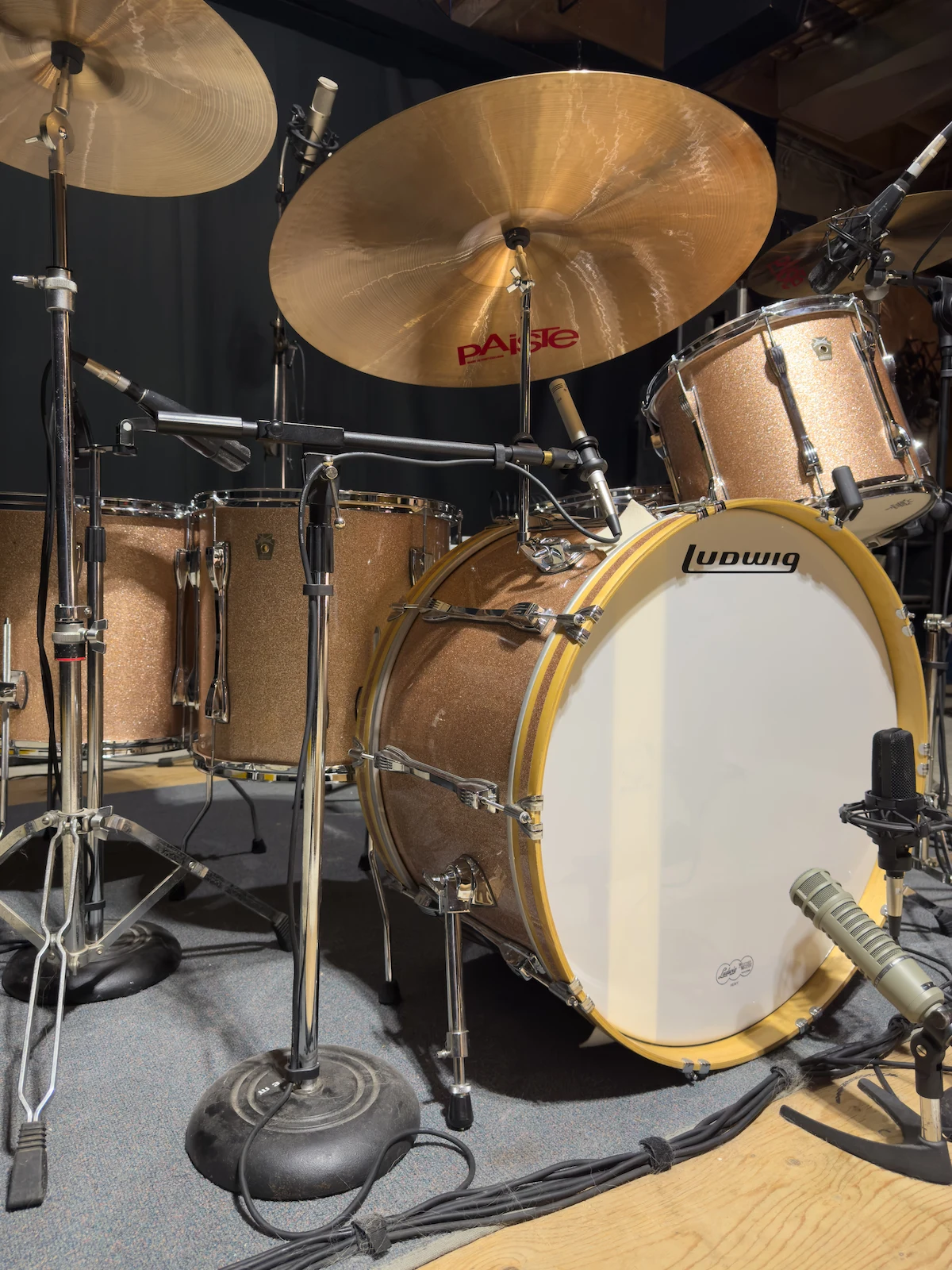
Ludwig Classic Maple drum kit used extensively in GrooveDrumming videos and recordings.
The main GrooveDrumming recording kit is a 2001 Ludwig Classic Maple setup.
- Bass Drum: 14" x 26"
- Rack Tom: 12" x 14"
- Floor Tom: 16" x 16"
- Floor Tom: 16" x 18"
The larger drum sizes produce a broad fundamental tone, strong low-end movement, and the kind of physical response that works especially well with an open recording approach.
Rather than heavily damping the kit, the drums are tuned so the shells and heads can resonate naturally while remaining controlled enough to sit together as one instrument.
Drumheads and Tuning
Head choice and tuning are treated as part of the recording chain. Currently using REMO Vintage Coated Emperor batter and Coated Ambassador reso.
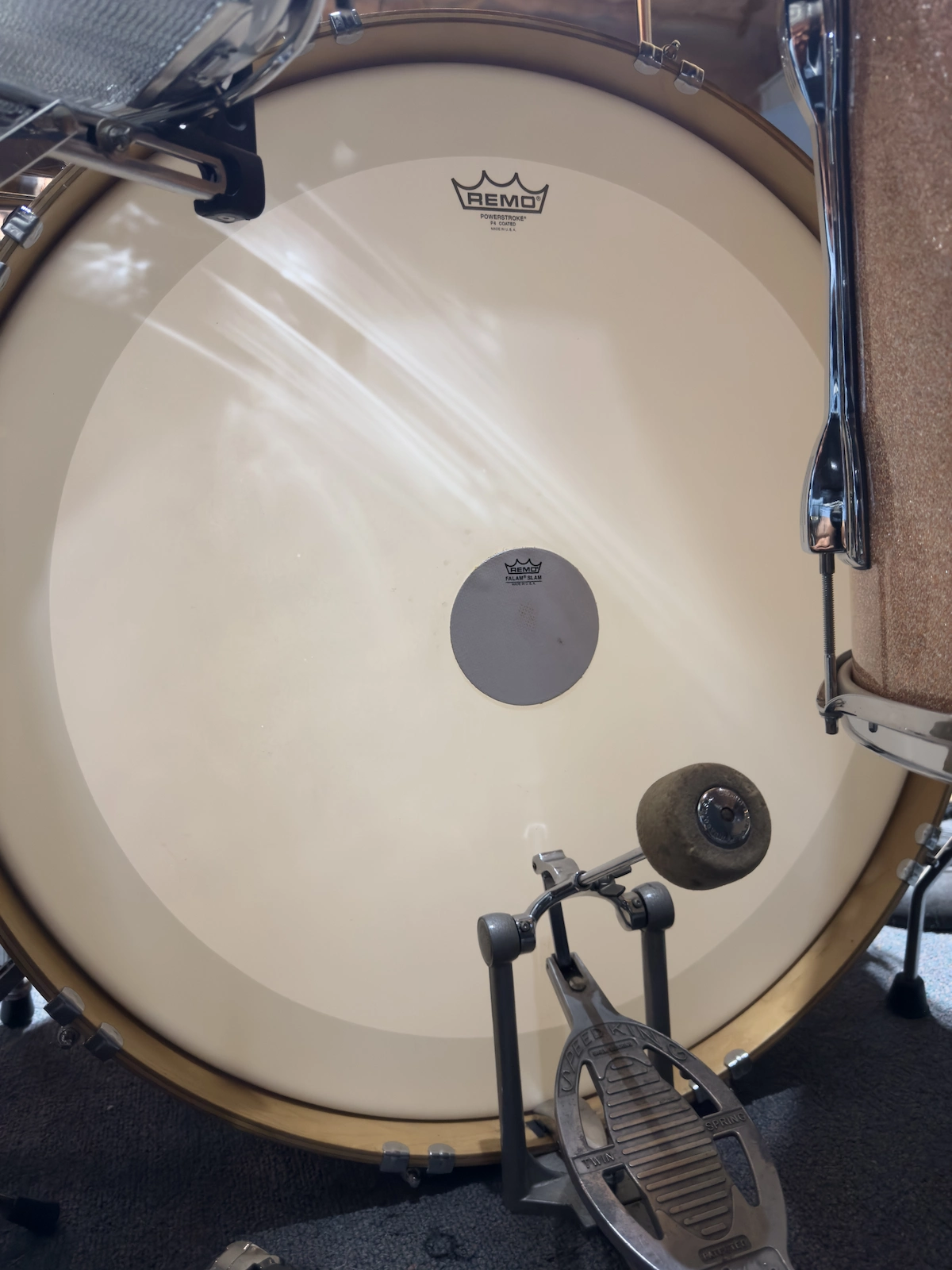
The 26-inch bass drum batter currently uses a REMO Powerstroke 4 with a Falam Patch. The single-ply Ludwig resonant head is unported. A felt strip provides enough control to reduce unwanted low-frequency bloom while preserving the depth and natural tone of the drum.
Toms are tuned for body, note definition, and musical sustain rather than maximum isolation or an extremely short studio sound.
The goal is to make the kit sound balanced acoustically so that less corrective EQ, gating, or processing is needed later.
Cymbals
Paiste 2002 Series
- 24" Ride
- 20" Crash
- 18" Crash
- 15" Sound Edge Hi-hats
Cymbal selection can change depending on the music, but the priority is always a balanced relationship between the cymbals and drums so the overhead microphones can capture the complete kit without the cymbals overpowering the image.
Recording Microphones
The microphone setup combines overhead, close, and room microphones. Each position has a specific role, but no single microphone is expected to create the entire drum sound.
Bass Drum
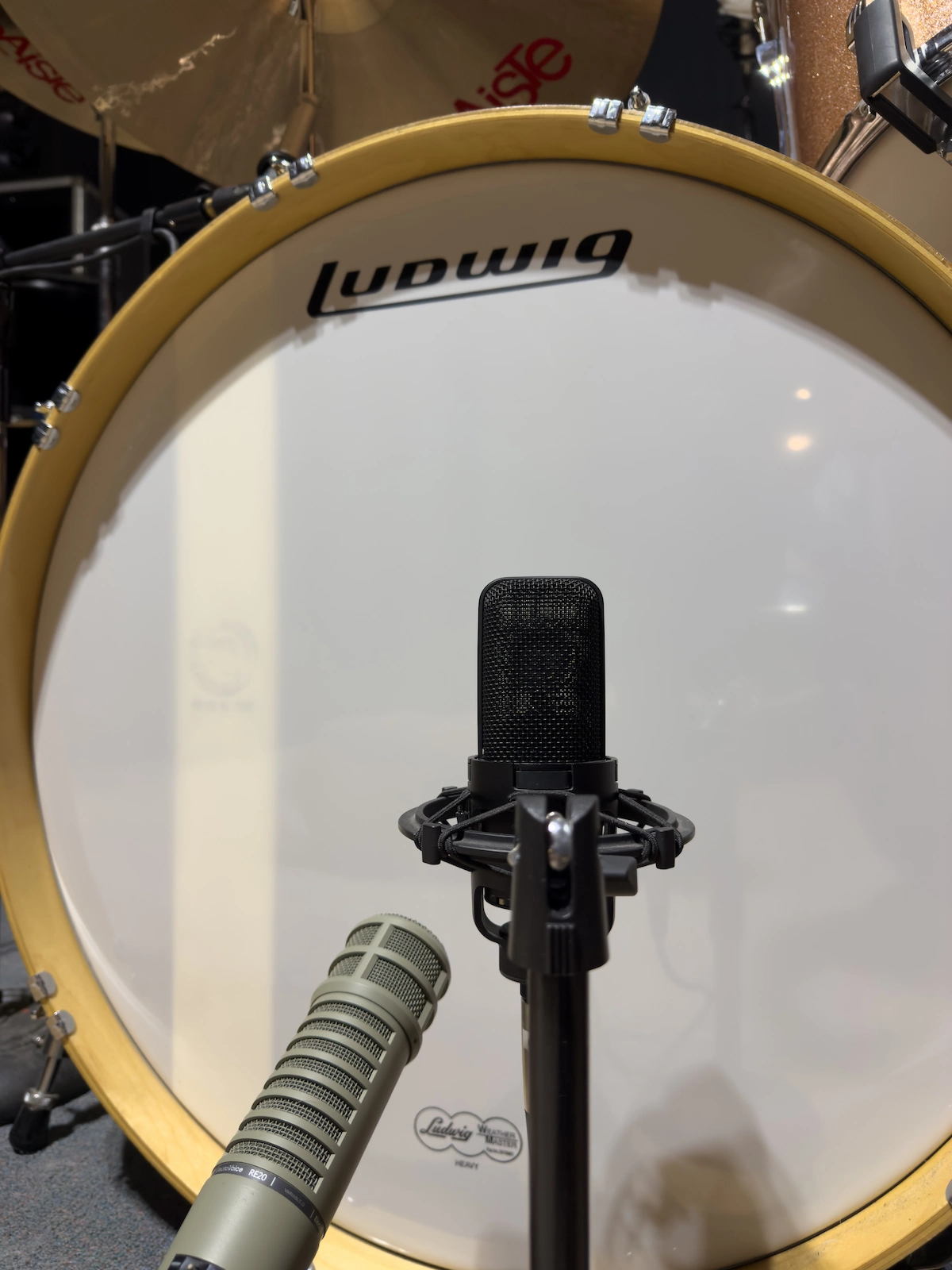
- Resonant Side: Audio-Technica AT4040
- Resonant Side: Electro-Voice RE20
The bass drum microphones provide definition and low-frequency support while still allowing the overheads and room microphones to carry the natural character of the drum.
Snare Drum
- Top: Shure SM57
- Bottom: Yamaha MZ105be
Hi-Hat
- Yamaha MZ105be
Ride Cymbal
- Samson C02
Toms
- Rack Tom: Sennheiser MD421-U5
- Floor Tom: Sennheiser MD421-U4
- Floor Tom: Sennheiser MD421-U4
The MD421 microphones add definition and body to the toms while allowing the overhead microphones to retain the overall image of the kit.
Overheads
- Left: Audio-Technica ATM450
- Right: Audio-Technica ATM450
The ATM450 pair is arranged in an ORTF configuration and forms the foundation of the stereo drum image.
Rather than treating the overheads primarily as cymbal microphones, they are positioned to capture the drums and cymbals together as one instrument.
Room Microphones
- Rear Mono Room: RODE K2 Tube
- Front Room Facing: AKG P120
- Front Room Facing Away: RODE NT1A
Room microphones capture the reflections, movement, and depth surrounding the kit. They help connect the close microphones and overheads while preserving the feeling of hearing an acoustic drum set in a real room.
Learn more about the stereo technique and microphone philosophy on the GrooveDrumming drum recording page.
Microphone Preamps
Microphone signals are amplified using two Audient ASP800 eight-channel microphone preamps.
- Audient ASP800: 8 channels
- Audient ASP800: 8 channels
- Total Available Mic Preamps: 16 channels
Four channels also provide Audient's HMX and IRON analogue coloration.
These channels are used selectively where additional harmonic weight or character benefits the source rather than being applied across the entire recording.
In the current setup, the coloured channels are primarily used for the stereo overheads, snare top, and the RE20 on the bass drum resonant side.
Conversion and Recording
The Audient preamps feed directly into two Lynx Aurora 16 converters.
- Converters: 2 x Lynx Aurora 16
- DAW: REAPER
- Recording Computer: Windows-based system
The Lynx converters provide the connection between the analogue recording chain and the digital recording system while maintaining the transient detail, stereo image, and low-frequency information captured by the microphones.
The recording system is designed around reliability and transparency rather than adding unnecessary processing during capture.
Signal Path
The main recording path is straightforward:
Microphones > Audient ASP800 preamps > Lynx Aurora converters > REAPER
Keeping the recording chain relatively direct and stay in digital makes it easier to hear what changes in tuning, microphone placement, phase, and playing technique are actually doing to the sound.
Monitoring
Accurate monitoring is essential when making decisions about drum tuning, microphone placement, phase, balance, and dynamics.
The GrooveDrumming monitoring system combines Tannoy loudspeakers with Bryston amplification.
- Main Monitors: Tannoy DC6000 (3809)
- Nearfield Monitors: Tannoy NFM 6 II
- Low-Frequency Monitoring: 4 x JBL 2235HPL drivers in two JBL 4508 cabinets
- Amplification: Bryston 4B3, Bryston 4B Pro, Yamaha PC2002
- Analogue Monitoring / Mixing: Allen & Heath GL2800-32
The purpose of the monitoring system is not simply volume. It needs to reveal stereo depth, low-frequency balance, cymbal character, phase relationships, and how naturally the kit sits together.
Recording Philosophy
None of this equipment is intended to substitute for the sound of the instrument or the player.
The drum kit, room, microphones, preamps, converters, and monitors form one connected recording system.
The goal is to preserve the natural attack, sustain, depth, balance, and movement of the acoustic kit while giving each microphone enough definition to be useful in the final mix.
To learn how these microphones are placed and balanced, continue with Recording Drums as One Instrument.
Hear the Equipment in Context
Equipment specifications only tell part of the story. The real purpose of the recording chain is the sound it produces when the drums, room, microphones, and player work together.
GrooveDrumming performance videos and drum tracks provide examples of the recording setup in use.