

Learning
How Drum Hardware Affects Feel and Performance
Drum hardware influences more than positioning. Pedals, stands, racks, and mounting systems all affect feel, response, comfort, stability, and the way the kit reacts while playing.
Bass Drum Pedals
At first glance, a bass drum pedal may seem simple: step on the footboard and strike the drum. But modern pedals vary dramatically in feel, response, control, and adjustability.
Drive type, footboard design, cam shape, and overall construction all contribute to how a pedal reacts under the foot.
Pedal Drives
The drive system connects the footboard to the beater. The three main designs are chain drive, belt drive, and direct drive.
Chain Drive
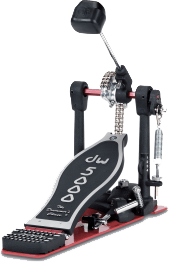
Chain-drive pedals are the most common. Single-chain pedals often feel lighter and more responsive, while double-chain pedals generally provide increased durability and stability.
Double-chain designs are popular for heavier playing styles because they resist side-to-side flex and maintain a solid connection during powerful strokes.
Belt Drive
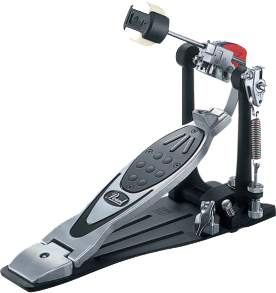
Belt-drive pedals replace the chain with a solid belt. Many drummers describe belt drives as smoother and lighter-feeling compared with chain-drive designs.
Modern belts are far more durable than older versions and can provide a strong connection between the footboard and beater while reducing friction.
Direct Drive
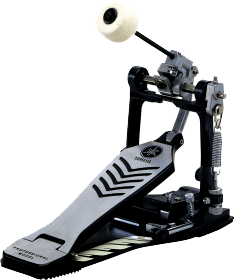
Direct-drive pedals use a solid linkage between the footboard and beater. This removes the flex and give found in chains or belts.
Direct drives are often associated with speed, precision, and fast response, though some drummers prefer the slightly softer feel of chain or belt systems.
Footboards
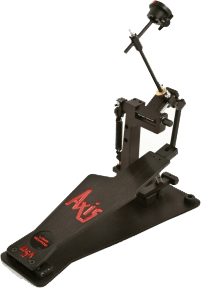
Most pedals use a standard footboard with a hinge near the heel. Longboard pedals remove that hinge and allow the entire board length to act as the playing surface.
Longboards are popular among drummers who use heel-toe or rocking techniques for rapid double strokes. They can also feel more comfortable for players with larger feet.
Cams
The cam controls how the beater accelerates during the stroke.
- Linear cams: maintain a consistent feel and beater speed throughout the stroke.
- Offset cams: accelerate the beater near the end of the stroke for added speed and punch.
Offset cams often create a whip-like sensation as the beater approaches the head, while linear cams tend to feel smoother and more even.
Some pedals include interchangeable or adjustable cams so drummers can customize the response.
Simple vs. Adjustable Hardware
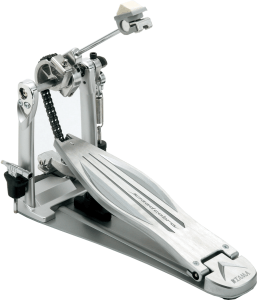
Some drummers prefer simple pedals with minimal adjustments and straightforward playability. Others enjoy highly adjustable systems designed for fine-tuning feel and response.
More adjustments can increase customization, but they also introduce additional moving parts, maintenance, and complexity.
The best pedal is not necessarily the most advanced one. It is the one that feels natural and disappears beneath your foot.
Cymbal Stands
Cymbal stands affect positioning, stability, transport weight, and how comfortably the setup fits around the player.
Hi-Hat Stands
Hi-hat stands come in many forms, including two-leg, three-leg, no-leg, and cable-operated designs.
Factors such as stand weight, pull-rod diameter, tripod design, and baseplate construction all influence feel and durability.
Straight Stands
Straight stands are simple and stable. They work well for straightforward cymbal positioning and are commonly used for ride cymbals.
Boom Stands
Boom stands provide more positioning flexibility and are ideal for crashes, effects cymbals, and unusual placements.
Some boom stands include retractable booms, allowing them to function as straight stands when needed.
Add-On Hardware
Add-On Boom Arms
Add-on boom arms allow smaller cymbals or accessories to mount from existing stands, reducing floor clutter.
Clamps
Clamps make it possible to mount instruments where full stands would be awkward or impossible.
Stackers
Stackers allow multiple cymbals to mount from the same stand, often used for splashes and effects cymbals.
Racks
Rack systems reduce the number of tripod stands on the floor and provide extensive mounting flexibility for larger setups.
Felts, Sleeves, and Cymbal Protection
Small accessories can make a major difference in cymbal longevity.
Sleeves and felts protect cymbals from metal-to-metal contact, reducing the risk of keyholing and cracking.
Cymbal springs and mounting accessories can also change the way cymbals react while playing.
Over-tightening cymbal wing nuts can restrict movement and increase the chance of cracking over time.
Choosing Hardware by Feel
Hardware should support the way you play rather than fight against it.
Heavy-duty stands may provide stability for larger cymbals and aggressive playing, while lighter hardware may improve portability and setup speed.
Pedal feel is highly personal. Some drummers prefer smoothness and rebound, while others prefer directness and speed.
Positioning also matters. Hardware should allow the kit to feel comfortable, natural, and balanced around the player.
Final Thought
Good hardware does more than hold drums and cymbals in place. It affects comfort, response, confidence, and consistency.
The best hardware is reliable, comfortable, and musical enough that you stop thinking about it and simply play.