

Learning
How Drum Sticks Affect Sound
Drum sticks are simple tools, but small differences in size, weight, material, tip shape, and finish can change the way the drums respond and the way cymbals speak.
Choosing a Stick With Purpose
Drum sticks are not overly mysterious, but there is useful information to understand when choosing a size or model. The right stick can affect rebound, control, volume, articulation, cymbal tone, and the way the kit feels under your hands.
A stick is not just something you hold. It is part of the sound chain between your hand and the drum.
What Do the Numbers and Letters Mean?
The history behind the numbers and letters stamped on drum sticks is a little unclear, but the original system was connected to both musical use and stick diameter. In general, larger sticks used lower numbers, while smaller sticks used higher numbers.
- A originally referred to orchestra use.
- B referred to marching and concert bands.
- S referred to street band use.
- D, used by Gretsch, referred to dance band use.
- 2B is a common thicker stick size.
- 7A is a common thinner stick size.
Most manufacturers still offer classic sizes such as 2B, 5A, 5B, and 7A. Beyond those standard models, many companies use their own naming systems, and the model numbers are often closer to product names than universal measurements.
Wood Type and Feel
The most common woods used for drum sticks are hickory and maple, with oak also being a popular choice for players who want more density and durability.
Hickory
Hickory is medium weight, durable, and versatile. It has a natural feel and absorbs shock well, which makes it a reliable choice for many drummers.
Maple
Maple is lighter than hickory, which allows a drummer to use a larger diameter stick without adding as much weight. Maple can feel quick and sensitive, but it usually wears faster than hickory.
Oak
Oak is heavier and denser. It can withstand harder playing and tends to last longer, but the extra weight may not feel as responsive to every player.
Aluminum and Polyurethane
Some specialty sticks use aluminum cores with replaceable polyurethane sleeves and tips. These are designed for durability and extra rebound, though the feel is different from wood.
How Tip Shape Affects Sound
Tip shape has a noticeable effect on cymbal sound and articulation. The difference can be subtle on drums, but on rides and hi-hats it can change the attack, brightness, and definition.
- Oval: wide range of sound and response.
- Teardrop: warm tone with focused lows.
- Round or ball: clean, bright, and crisp.
- Acorn: full, rich, and broad.
- Barrel: punchy, loud, and direct.
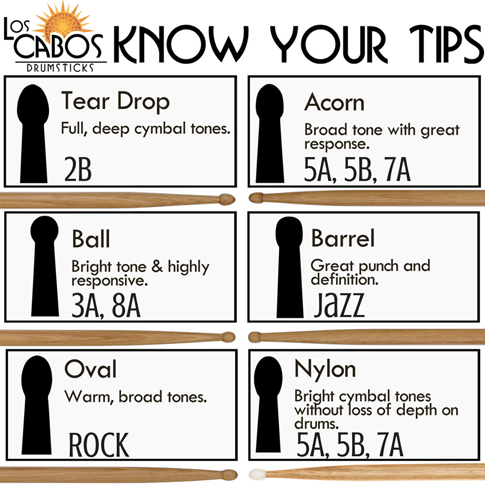
When choosing sticks, think about the music first. A lighter stick with a small tip may help with articulation and control. A heavier stick with a larger tip may help cut through louder music.
Wood Tips vs. Nylon Tips
Wood tips usually produce a warmer and more natural cymbal sound. Nylon tips are brighter, more consistent, and more durable.
- Wood tips: warmer, fuller cymbal tone.
- Nylon tips: brighter attack and longer tip life.
- Specialty tips: some designs try to combine durability with a warmer sound.
The choice is mostly about cymbal color. If you want bright stick definition, nylon may help. If you want a warmer and more blended cymbal tone, wood is usually the better starting point.
Finish, Grip, and Lacquer
Lacquer helps seal the wood and can stabilize moisture content. It also changes the way the stick feels in the hand.
- Lacquered sticks: smoother feel and better moisture resistance.
- Unlacquered sticks: more raw grip but more affected by moisture.
- Grip-coated sticks: designed to reduce slipping.
Some drummers like a slicker finish because it moves freely in the hand. Others prefer a drier or tackier feel for control. Sweat, hand pressure, and playing style all matter.
Best Stick Size for Beginners
One size does not fit everyone. A younger student or a drummer with smaller hands may feel more comfortable with a smaller stick such as a 7A. A 5A is often a common starting point for average-size teenage or adult hands.
Control matters more than choosing the biggest or loudest stick. If the stroke feels out of control with a thin stick, try something slightly thicker. If the stick feels heavy and slow, try something lighter.
The best choice is the stick that helps the drummer play with balance, control, and relaxed movement.
Final Thought
A stick affects more than volume. It changes the sound, the rebound, the cymbal response, and the way your hands interact with the kit. The right stick should support the music, not fight the player.
Choose sticks by listening as much as by feel.